The simple answer is: quality and certainty. Cheap alarm systems are often a harbinger of problems. For your own safety and peace of mind, we always advise choosing a good system that meets all requirements, such as the Ajax alarm system.
When you decide to secure your home or office, you can choose between a professional alarm system and a cheaper, non-certified alternative.
At first glance the differences seem small, but a cheap system can be prone to false alarms, can fail without warning, and often offers insufficient radio range between the components.
This leads to gaps in your security. In addition, connection to an alarm receiving centre is usually not possible, because alarm receiving centres only work with good alarm systems. Alarm receiving centres do not want to work with unreliable systems, because this raises their workload unrealistically. As a result, you always have to respond to alarms yourself. For reliable protection, it is essential to invest in a certified, professional system that offers continuity and support.
In this article we compare the Ajax alarm system with a cheap alarm system.
Reliable communication channels
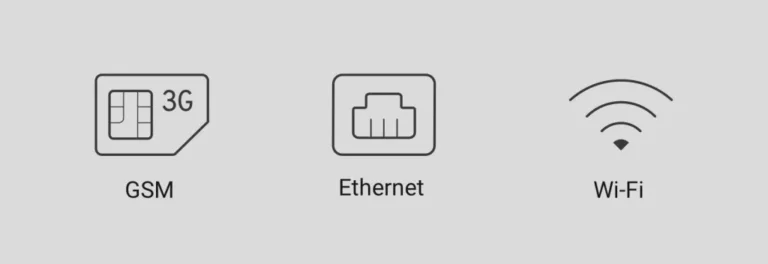
Alarm systems that rely on a single communication channel are unreliable because they are susceptible to failure through natural causes or sabotage, such as the balance on your SIM card running out or a fault at your mobile provider. Systems with multiple communication channels, by contrast, are more reliable. They use one channel as the main channel and others as backup, which makes it less likely that all channels fail at the same time. It is also important that these channels are of different types, to reduce risks such as mobile jamming. How long it takes to switch between the communication channels also matters.
With cheap alarm systems, the process can take tens of minutes. A burglary of an apartment, meanwhile, rarely lasts longer than 5 to 10 minutes.
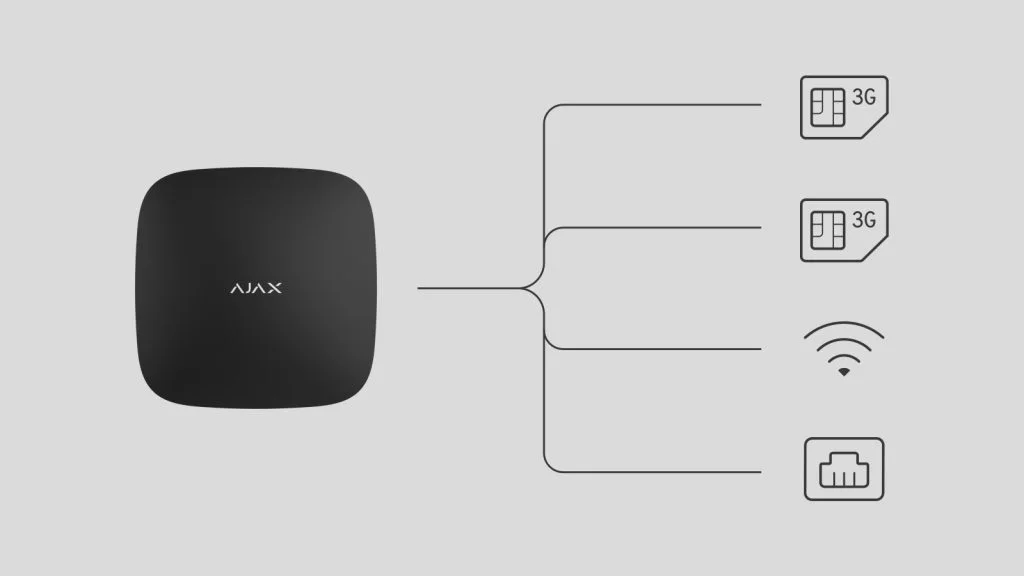
The Ajax Hub and Ajax Hub 2 use mobile signals and ethernet to communicate events and alarms. The Hub 2 Plus is unique as a control panel because it uses four authorised communication channels at the same time: WiFi, ethernet and two 2G/3G/4G SIM card slots.
Learn more about the differences between the Ajax Hubs here.
Security via the server
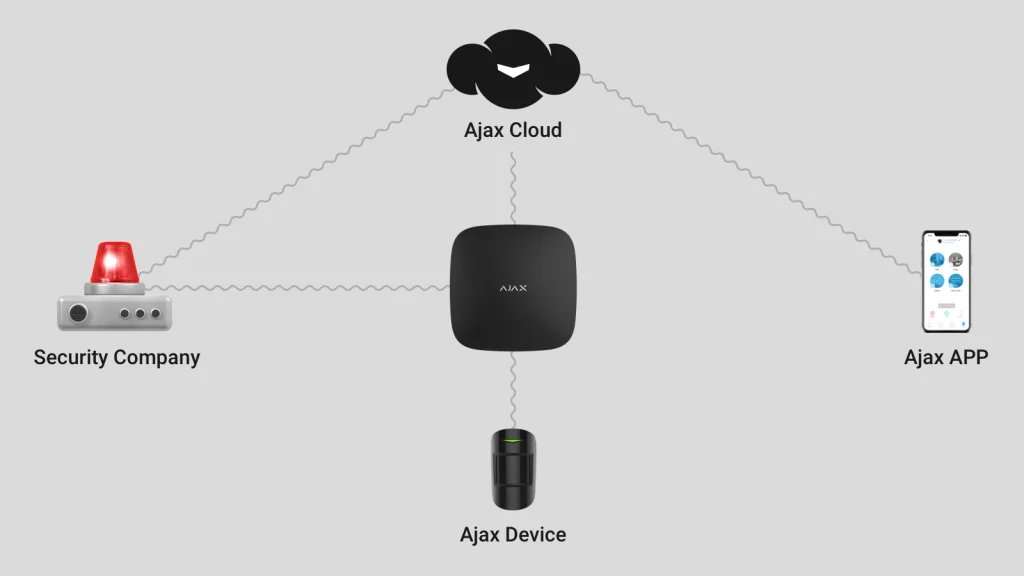
The cloud server forms the link between the control panel and the Ajax app, which gives you, as the user, control over the system from any location. The server also sends push notifications about system events and alarms.
In professional systems, the cloud server also checks the connection and functionality of the security equipment. A higher frequency of these checks leads to faster detection of problems and warnings to users and security companies.
In our experience, this is where cheap alarm systems fall short.
In addition to the ability to manage hubs via apps and receive push notifications, the Ajax Cloud service also shows real-time updates of the security system. The service maintains regular communication with the hub, every 10 to 300 seconds depending on the chosen settings, to display the current status in the Ajax applications. If the hub loses the connection, the service sends an alarm to the users and the security company.
Radio frequency
In wireless security systems, communication between the control panel and the detectors takes place over radio channels. This communication must be highly reliable, because even brief disruptions can be problematic and loss of communication is unacceptable. Professional systems usually use frequencies of 433 MHz or 868 MHz and apply frequency hopping, where the frequency is switched automatically in the event of interference, to increase reliability.
With cheaper alarm systems without frequency hopping, communication is often less reliable, because they are tied to one specific frequency. This makes them more vulnerable to disruptions and interference, both accidental and deliberate. Without the ability to change the frequency, these systems may be unable to send alarms or pass on updates during disruptions, which reduces security.
Why are the components not connected to each other via WiFi?
- In apartment buildings and offices there is a lot of noise on Wi-Fi frequencies (2.4 GHz and 5 GHz) and they are overloaded by other devices, which leads to data loss during transmission, known as 'domestic jamming'.
- The involvement of the premises' network equipment (such as routers and repeaters) in data transmission over Wi-Fi determines the stability of the security system as a whole.
- WiFi has a limited communication range of approximately 150 metres without obstacles. Using a multi-component network can remove this limitation, but each additional unit reduces the reliability of the security system.

Ajax Jeweller radio technology
The Ajax security system uses Jeweller radio technology for communication between the Hub and the devices, operating within frequency ranges of 868.0 to 869.2 MHz. The system continuously monitors the noise level on the channel. If there is too much noise, the Hub detects jamming, switches to a clearer frequency and warns users and security companies. Jeweller transmits alarms in less than 0.15 seconds, then adjusts the signal strength automatically, and does so while offering a range of up to 2000 metres.
Mutual communication for better security
In security systems, communication between devices can be one-way or two-way. With one-way communication, detectors only send signals to the control panel, without feedback. If a device fails or loses the connection, the panel remains uninformed, which can lead to unnoticed security problems. Two-way systems, in which detectors and the control panel communicate interactively, are more reliable. They confirm receipt of alarms and allow the panel to adjust settings and monitor the status of devices.
Approximately every 12 seconds, the detectors send a status report to the hub. As soon as the hub receives the report, it confirms this and updates the device status in the application. If a device does not respond for any reason, the hub detects that the device has lost the connection and informs the users and the security company.
When an alarm is triggered, the detector asks the hub for confirmation. If the detector receives no confirmation, it keeps transmitting the alarm until the hub accepts and processes it.
Thanks to the two-way connection, users can test devices and change settings remotely via the Ajax app. This includes things such as sensor sensitivity, siren volume, responses to alarms, assignment to security groups, and more.
Disadvantages of one-way communication
One-way communication can be unreliable because it gives no confirmation that the message was received or understood correctly by the recipient. Without feedback, the sender cannot be sure whether the information arrived as intended, which leaves room for misunderstandings, misinterpretations or even important messages being missed entirely.
When sending alarms or status reports, one-way communication can result in problems or faults going undetected, because there is no check on whether the information was passed on successfully. This can lead to delayed responses, failing security measures or unreliable operation of systems.
This is why we always prefer two-way communication, as it verifies both the sending and the receiving of information, which improves the reliability and effectiveness of communication.

Data encryption
The data exchanged between the detectors and the control panel must be encrypted and protected against tampering. This measure prevents the equipment from being manipulated, including the forging of the remote control used to manage the security modes. In the worst case, intruders could otherwise gain full control of the security system.
The radio signal is best encrypted with an advanced algorithm, because outdated encryption makes the system vulnerable to hacking attacks. Cracking 128-bit AES encryption, for example, takes hundreds of years, whereas an alarm system with outdated or simple encryption can be accessed within minutes with a code grabber.
A code grabber is a device that intercepts signals between a security system and a control device (such as a remote control or keypad), which makes it possible to hack the security system.
Instead of standard algorithms and approaches, the Ajax alarm system uses proprietary solutions. All transmitted data is encrypted with the AES algorithm, using a unique key. Each Ajax device has its own unique identifier, and the Jeweller protocol provides a system of characteristics and markers for identifying these devices. The security system cannot be disarmed with a remote control that is not paired with the hub.
The reliability of Ajax is confirmed by the EN 50131 certification, under which the devices of the security system are classified as Grade 2. This means they can withstand sophisticated attacks by experienced attackers with specialist equipment.

Connection to an alarm receiving centre
A professional alarm system identifies threats as early as possible. However, being aware of the problem is not enough: it must be responded to in the right way. After receiving a message from the alarm system, the person can contact the police themselves (confronting the criminals without outside help is not the best idea). It is more sensible, however, to entrust the response to professionals by connecting the security system to the alarm receiving centre of the security company.
Security companies only connect certified security systems to their alarm receiving centres. During the certification process, the security equipment undergoes tests carried out by independent laboratories licensed for specific tests. These tests cover functional, climatic and mechanical resistance, immunity to external electromagnetic fields, radio communication quality, and sensitivity to external influences. If the security equipment fails a single test, it does not receive certification.
Before new equipment is used under real conditions, security companies place it in test environments (such as apartments, houses or offices) alongside security systems that have already been approved. If the new system shows comparable reliability, meaning it has no false activations or disruptions and detects threats correctly, it is connected to the alarm receiving centres.
If an alarm system fails one of the tests during the certification process, it will not receive certification. In that case it will not be connected to the alarm receiving centres of security companies.
For your own safety, therefore, do not choose a cheap alarm system.

Peter Meijer
Founder of Secures & YTEE. Expert in alarm systems, surveillance cameras and burglary protection for homes and commercial premises.